
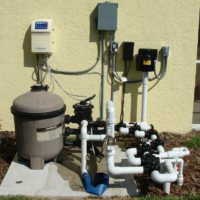
Four Best Home Water Filtration Systems You Should Know
There are many ways to purify and filter the water in your home. Whether you live in an apartment, duplex, single-family house, multi-story home, or condominium, there are many ways to improve the poor quality of your H2O. Budget, square footage, preferences, location, water hardness level, and personal preference should influence your choice of the H2O purification method. Besides, this method is beneficial for filtering out contaminants like lead. Below are the most popular options for water purification or filtration.

Reverse Osmosis Systems
Reverse osmosis is an excellent and effective water treatment option for your home. This water treatment process removes unwanted impurities and heavy metals from the water. It is possible through the use of a reverse osmosis system, which can remove sodium, potassium, and nitrates from your tap water. With the push of a button, you can have contaminant-free water in your office or home year-round. It’s a great eco-friendly alternative to bottled water.
Iron Water Filtration Systems
The well water can contain many contaminants that can be harmful and unhealthy. These contaminants include chemicals, solutes, E. coli, and E. coli bacteria. There have been many advances in well water filtration, including more advanced iron removal methods that provide economical and efficient solutions for well water. The well water purification services include iron filtration, iron removal systems, iron bacteria removal, and many other options.
Water Softening Systems
Water treatment is one of the best and most basic ways to improve a property’s water quality. To treat H2O, a water softening system must be installed. The softening system is installed in your existing plumbing system. It uses “ion exchange technology” to exchange hard minerals for softer ones, such as sodium ions.
The mineral reservoir contains tiny resin beads that have a negative charge. These attract negatively charged hard minerals, such as iron and calcium. By treating the H2O, the impurities are removed and replaced by healthy minerals. It improves many aspects of tap water.
Tap Mounted Water Filtration Systems
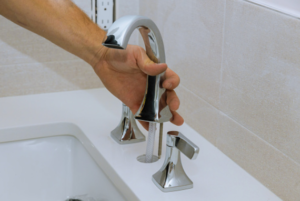 These filters can be placed on your bathroom or kitchen faucet. They reduce chlorine, dirt, and rust that can build up in old pipes. After installation, your water will taste and smell better. Installation is quick and easy, so you may wonder if this is true. Besides, almost all refrigerators with a water dispenser in the door are equipped with a water filtration system. These refrigerators may only filter water, while others filter ice from the ice machine.
Another option is to use standard shower filters, which are proven to reduce chlorine levels. You will also find that your skin and hair will be softer, and the pH level will be more balanced. They are easy to install. It is why some homeowners tend to choose this system. Therefore, they could obtain the benefits and maintain it thoroughly.…

 Many homeowners think that tap water is safe and clean. However, this is not always the case. Tap water can contain impurities, even if it looks and tastes good. Some contaminants are harmless, while others can damage appliances and fixtures. Installing a water filtration system in your home can make a big difference. Water filtration systems can remove chlorine, fluoride, and parasites from your home’s tap water. This way, they can produce perfectly
  Distilled water systems work by boiling the water and passing the steam into another chamber. This converts the vapor back into the water without contaminants. This process is quite complicated, but it is highly effective at removing heavy metals and fluoride from tap water. It also kills any bacteria present in the water. This system can remove both harmful impurities and beneficial minerals from the water. It is not easy to set up such a system at home and usually requires professional help.
 Reverse osmosis systems have become a popular choice for home plumbing. The number of steps required to purify the water is a significant difference between models. More expensive systems can go through 5-6 degrees. These include carbon filters, micronic filters, and semi-permeable membranes. Ultraviolet light can also be used to remove more resistant bacteria. The reverse osmosis system is straightforward to use once installed. The system is very inexpensive to operate, and the filter only needs to be changed every six to twelve months.…